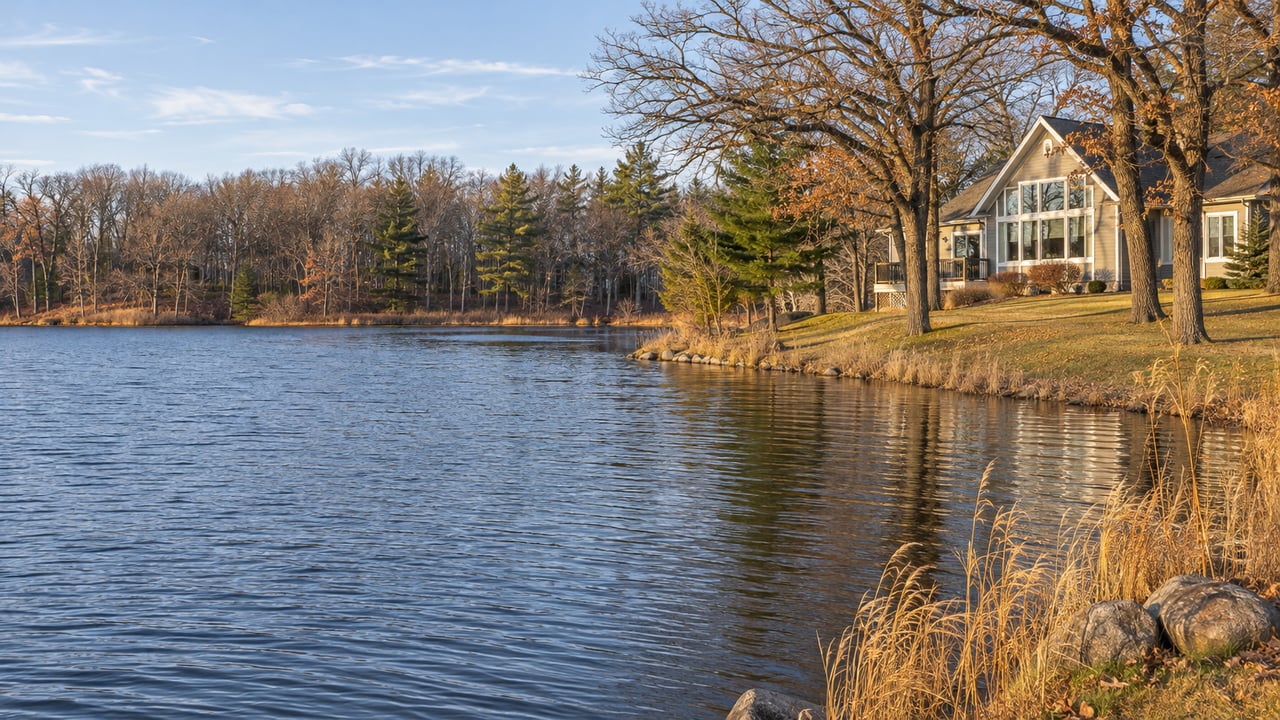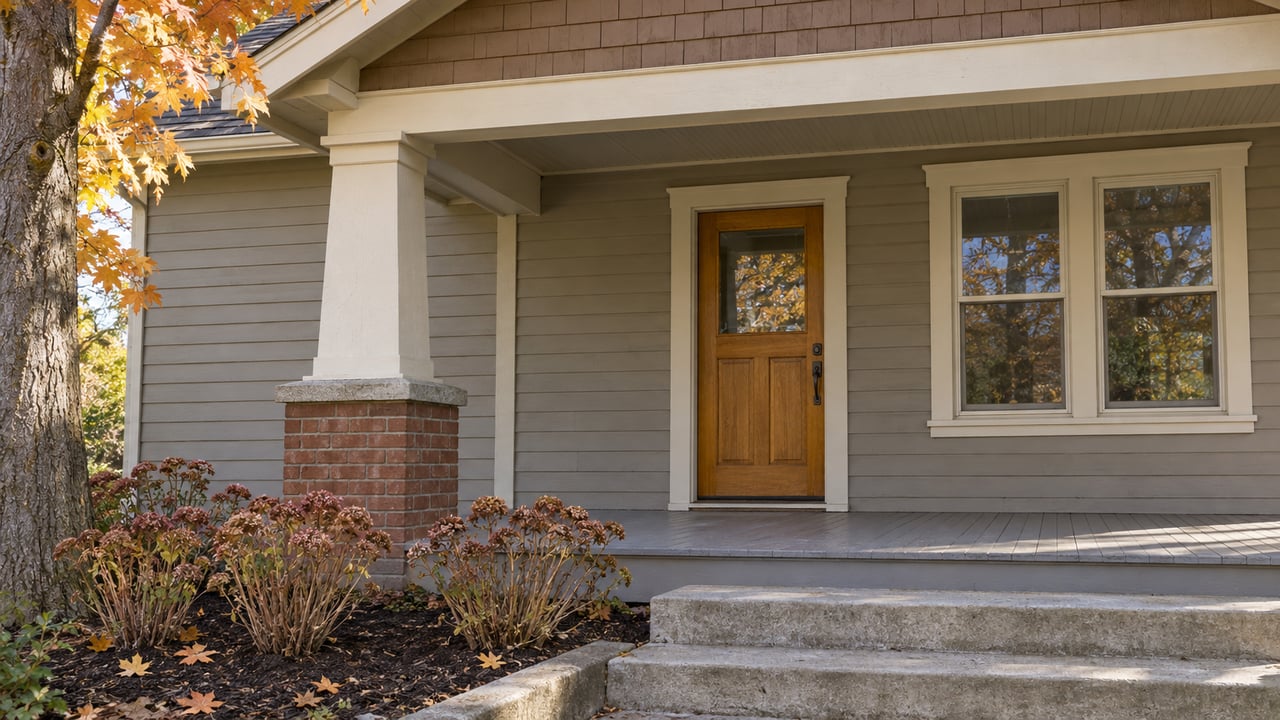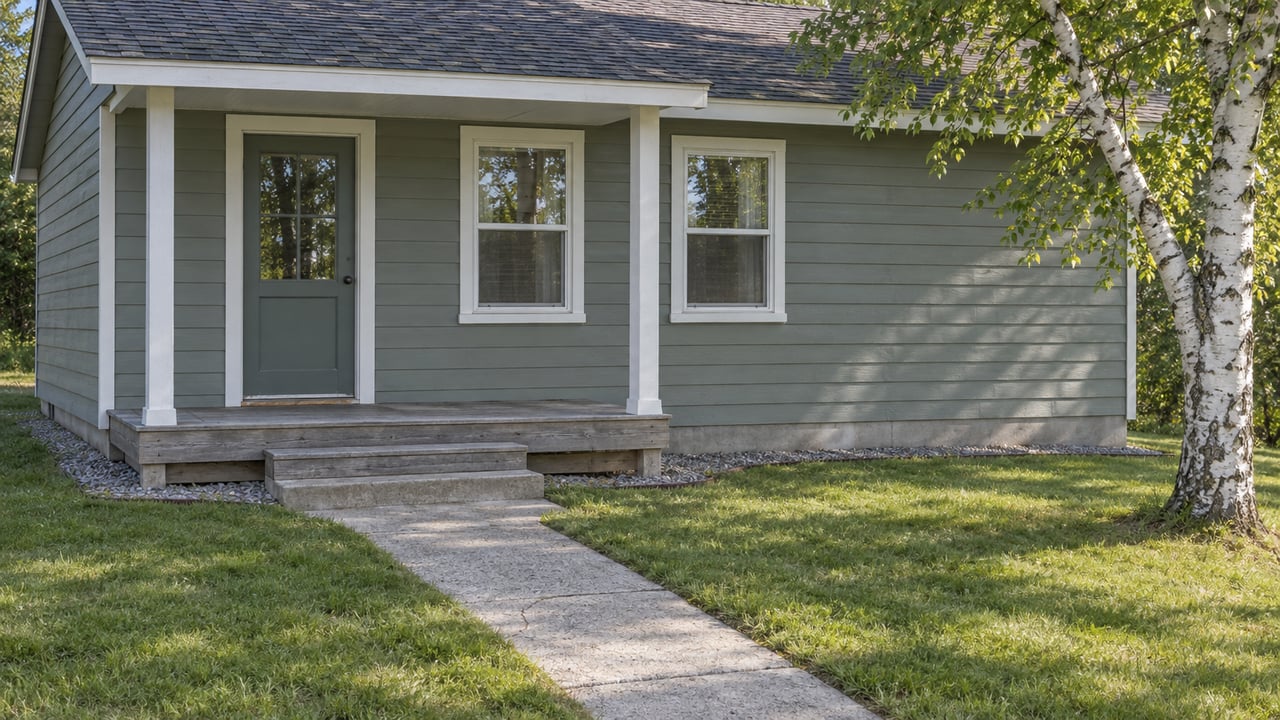
If an old resort cabin sits right at the water's edge and costs less than a standalone lake home down the shore, what is the price actually paying for?
It's a fair question this month. On October 20, Douglas County commissioners approved a planned unit development, or PUD, at Vacationer's Inn Resort on Lake Cowdry. The resort's eight existing cabins will now be sold individually for private use. The county's own write-up opens with "Another resort in Douglas County is converting to private use." Lake Cowdry is in Douglas County, and the Minnesota DNR lists Alexandria as its nearest town.
I've been selling lake property around here since 2006. My view is that a converted resort cabin is a different kind of property from a lake home, and it needs to be judged differently.
The setback problem starts at the front row
Old resorts were built for guests, long before today's shoreland setbacks existed. In the county's summary of the Vacationer's Inn approval, many of the cabins don't meet structural setbacks, but any replacement structure has to.
That one sentence matters more than anything else in the approval. The Douglas County zoning ordinance spells out what happens to existing units in the shore or bluff impact zone, which is the strip closest to the water. The ordinance calls for conditions that "preclude exterior expansions in any dimension or substantial alterations." Those conditions also have to provide for moving the unit, where feasible, to a spot that meets setback and elevation requirements whenever it's rebuilt or replaced.
The ordinance also says that in resort conversions, "cabins must remain cabin sites and recreational vehicles must remain recreational vehicle sites."
Shared shoreline and docks
In a residential PUD, much of the shore is set aside as shared open space, and that requirement is built into how these projects are approved.
Here's what Douglas County requires for residential PUDs:
- At least 50 percent of the total project area must be preserved as open space.
- Cabin sites, roads, parking areas and structures don't count toward that open space.
- The shore impact zone has to be included in the open space, and for existing developments at least 50 percent of that zone must stay in its natural or existing state.
- The open space has to be locked in with restrictive deed covenants, permanent easements or another equally permanent tool.
Docks follow the same logic. Minnesota's shoreland rule for PUDs, Minn. R. 6120.3800, calls for centralized shore recreation facilities. It allows no more than one continuous beaching, mooring or docking space for each allowable first-tier dwelling unit or site.
A 2025 case from Crow Wing County shows how this plays out. The Brainerd Dispatch reported that the six former Butternut Point resort cabins were to be sold as individual lots. Owners would share the common space through a homeowners association, and each buyer would own one-seventh of the common area. The plan called for centralized docks with eight mooring spaces. At public meetings, residents asked about parking, garbage, boat slips, septic capacity and short-term rentals. Those are the right questions for any converted-resort buyer.
The owners association
Because the shore, the docks and often the septic are shared, someone has to own and run them. Douglas County requires every residential PUD to use an owners association unless an equally effective alternative is set up. The ordinance sets four features:
- Membership is mandatory for every purchaser and every later purchaser.
- Each member pays a pro rata share of the association's expenses, and unpaid assessments can become liens on units or sites.
- Assessments must be adjustable to accommodate changing conditions.
- The association is responsible for insurance, taxes and maintenance of all commonly owned property and facilities.
The state rule uses nearly the same language. The third point is the one buyers tend to skip past. Dues set when a resort is first converted reflect the shared docks, roads and systems as they are on day one. Because assessments have to be adjustable, the bill can change as those shared facilities age.
Rental rules can change too. In the Butternut Point case, the HOA documents didn't allow short-term rentals, but the Brainerd Dispatch reported that the HOA could amend its declarations. County officials said they don't enforce the covenants. The fact that the property used to be a resort doesn't settle it.
Water and septic in the conversion
Douglas County requires that resort conversions with deficiencies in water supply, sewage treatment, impervious coverage, open space or shore recreation facilities be corrected, either during the conversion or on the schedule set in the conditional use permit. In residential PUDs, onsite water and sewage systems have to be centralized and meet state standards. Each sewage system also needs a suitable replacement soil treatment area.
If you've read our post on how Douglas County's septic rule works at the point of sale, it's worth asking whether the shared system is in compliance and what the association has set aside to maintain it.
Why resorts convert, and why some don't
The ordinance itself explains part of the county's reasoning. It says conversion to a residential PUD "often reduces lake usage" and is "often supported by neighboring property owners." Conversions are also exempt from the usual minimum of 2.5 acres and 300 feet of shoreline that new shoreland PUDs need. That exemption is how a compact older resort can become individually owned cabins when a new development on the same parcel couldn't.
Density gets a hard look too. If a resort has more units than the standards allow, the ordinance requires removing one unit for every three over the limit. The county board picks which ones go, based on size, age, condition, inadequate setbacks and how many buildings face the lake.
For the owners, the Star Tribune reported in 2024 that rising lakeshore values and taxes, pandemic-era demand for lake property, and the hard, low-margin work of running a resort are putting pressure on small Minnesota resorts. The same story describes selling cabins individually, with an HOA maintaining the shared property, as a path that can be the most lucrative option for the resort owner.
Around Alexandria, the picture is mixed. Before Vacationer's Inn, a proposal to convert Lake Carlos Bay Resort, filed by Klimek Estates LLC, went before the county board in March 2023 along with a preliminary plat called Lake Carlos Bay, as listed in an Echo Press agenda preview. Lake Darling Resort went the other direction this past March. The board approved an expansion of the resort property, two non-resort unit lots, 12 of 20 requested overnight mooring spaces and recreational equipment rentals to the public. It tabled a public restaurant and meeting space and asked Public Works for safer ways to cross County State Aid Highway 22 from a proposed parking lot. Mooring counts and shoreline use get negotiated item by item in these permits.
Questions to consider before you write an offer
| Question | Documents to review |
|---|---|
| Is my cabin in the shore impact zone, and what can I change? | The conditional use permit conditions for the conversion |
| How many dock or mooring spaces exist, and is one tied to my unit? | The PUD approval and the association declaration |
| What are the dues, and how have assessments changed? | The association budget and recent meeting minutes |
| Are short-term rentals allowed, and how can that change? | The recorded declaration and its amendment process |
| Who maintains the septic and water systems? | The declaration and the CUP's correction schedule |
None of this makes a converted resort cabin a bad buy. For many people it's the most practical way to spend summer evenings on a lake like Cowdry.
This post is general information, not legal, tax or financial advice. Before you commit, have the right professional review the specific permit and association documents for your situation.
If you're weighing a converted resort cabin against a standalone lake home, I'm happy to talk with you. You can reach me through Justin Habel or the buyers page. Let's Connect.